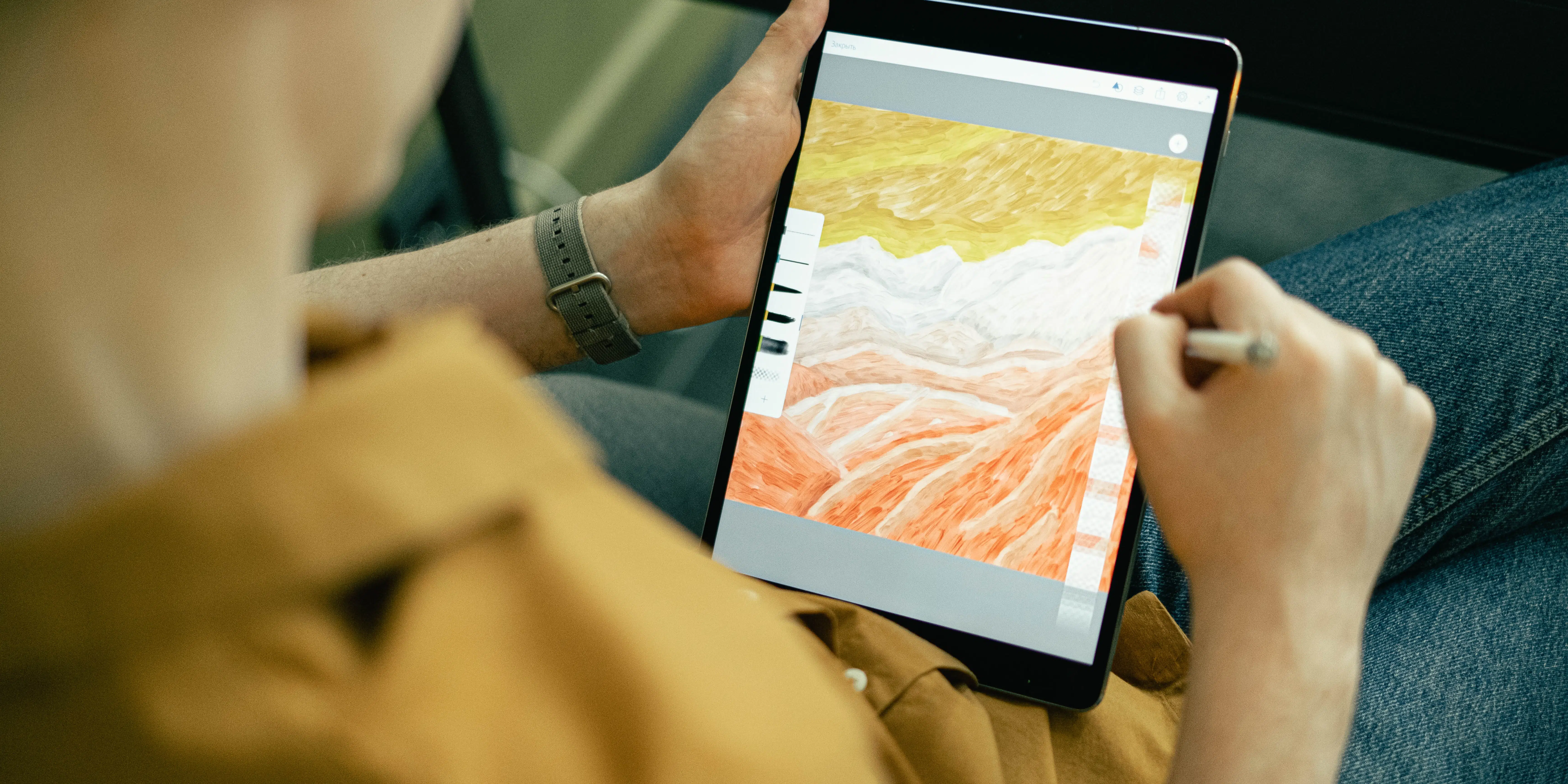
Ever been hit by a sudden wave of inspiration but had nowhere to let your creativity out? That’s the artist’s classic dilemma. An easy solution to this problem is standalone drawing tablets: your always-ready, mess-free canvas.
In this post, I’m your guide for the best standalone drawing tablets. From their sleek designs to their precision styluses, we’re exploring it all. You’ll discover everything from top-notch features to hidden gems.
Ready to find your perfect digital canvas? Let’s get started!
Quick List: Best Standalone Drawing Tablets
Here’s a list of the 10 best standalone drawing tablets:
- Apple iPad Pro 13-Inch (M4) — Best Overall (Editor’s Choice)
- New Microsoft Surface Go 2 — Best Lightweight Drawing Tablet
- XPPen Magic Drawing Pad — Best for natural pen-on-screen
- HUION Kamvas 22 — Best Drawing Tablet with Large Workspace
- PicassoTab X Drawing Tablet — Best for Beginners
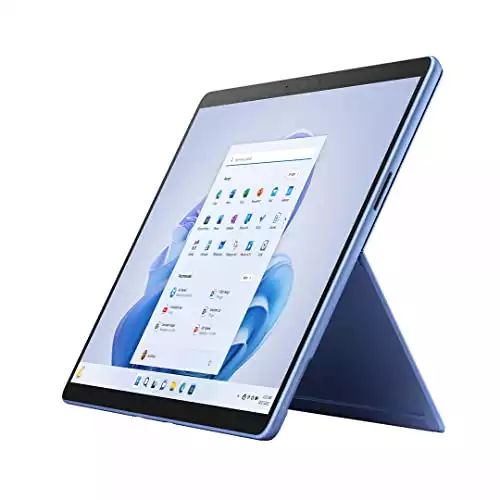
- Microsoft Surface Pro 9 — Best Value Drawing Laptop
- Samsung Galaxy Tab A9+ — Best for casual sketching
- SAMSUNG Galaxy Tab S9+ — Best Tablet for Drawing and Sketching
- Amazon Fire Max 11 tablet — Best Drawing Tablet with Great Battery-Life
- Wacom Cintiq Pro 16 — Best Drawing Tablet for Digital Artists
What is the Best Standalone Drawing Tablet in 2025?
After going through our rigorous testing process, I have found the Apple iPad Pro 13-Inch (M4) to be the best stand alone drawing tablet in 2025. It is an all-rounder, excelling in terms of processing power, display quality, stylus pen performance, and memory-storage combo.

The Apple iPad Pro 13-Inch (M4) is the ultimate tablet for creative professionals, offering unmatched performance with the M4 chip, a stunning Ultra Retina XDR display, and seamless Apple Pencil Pro support. Its ultra-thin design, full-day battery, and desktop-level versatility make it the best choice for design, illustration, and multitasking on the go.
- Ultra Retina XDR display
- M4 performance with 10-core GPU
- Lightweight despite a large 13-inch screen
- Apple Pencil and Magic Keyboard sold separately
- Higher price point
My Top 3 Picks
|
Top Pick

|
Best Value Drawing Laptop
|
Best Budget-Friendly Tablet

|
|
Primary Rating:
4.9
|
Primary Rating:
4.8
|
Primary Rating:
4.6
|
|
|
|
|
|
Screen Size:
13 inches
|
Screen Size:
13 inches
|
Screen Size:
10 inches
|
|
RAM:
8GB
|
RAM:
8 GB
|
RAM:
4GB
|
|
Storage:
256 GB
|
Storage:
256 GB
|
Storage:
64GB
|
|
Processor:
Apple M4
|
Processor:
Intel Evo i5
|
Processor:
MediaTek Quad-Core
|
|
Pros:
|
Pros:
|
Pros:
|
- Ultra Retina XDR display
- M4 performance with 10-core GPU
- Lightweight despite a large 13-inch screen
- Up to 15.5 hours of battery life
- Vibrant and clear display
- Robust performance with Processor
- Affordable all-in-one drawing tablet with stylus
- Pre-installed apps
- Micro HDMI and USB-C connectivity
Detailed Review of the 10 Best Standalone Drawing Tablets
1. Apple iPad Pro 13-Inch (M4) — Best Over All (Editor’s Choice)

The overall best standalone drawing tablet
Screen size: 13 inches | Processor: Apple M4 | RAM: 8GB | Storage: 256 GB
If you’re a creative professional who demands top-tier performance and precision, the Apple iPad Pro 13-Inch (M4) sets a new standard. It’s built for artists who want to run intensive design apps, render high-resolution images, or sketch with zero lag, all while enjoying a truly stunning display.
What immediately stood out was how thin and lightweight the device is despite its expansive 13-inch screen. At just 0.20 inches thick and 1.28 pounds, it felt incredibly easy to handle whether I was drawing at my desk or curled up on the couch. Apple has managed to deliver a larger canvas without compromising portability.
The Ultra Retina XDR display was hands down one of the best screens I’ve used on a drawing tablet. With a 2752-by-2064 resolution, ProMotion for 120Hz refresh, and P3 wide color, every line and brushstroke looked crisp and lifelike. The responsiveness when paired with the Apple Pencil Pro (sold separately) made sketching and shading feel seamless and intuitive.
Performance-wise, the M4 chip didn’t miss a beat. The 10-core GPU and advanced Neural Engine handled complex workflows, from running 3D modeling software to editing layered PSD files. Even while multitasking across multiple apps, the iPad Pro remained fast and efficient without heating up or draining battery quickly. I got a solid full-day use before needing to recharge.
What impressed me just as much was the ecosystem flexibility. iPadOS, with Stage Manager and external display support, gave me the feel of a full workstation setup when needed. Whether I was using a second screen, a Magic Keyboard, or simply navigating with touch, the transitions were fluid and productive.
Connectivity was well covered with Wi-Fi 6E and Thunderbolt / USB 4 support, making file transfers and accessory connections smooth. I found myself using the USB-C port for everything from external drives to my DSLR for image imports. The camera system, including the LiDAR Scanner and 12MP wide lens, also gave me surprising utility for AR-based design work and capturing textures.
The only catch? The Apple Pencil and Magic Keyboard are sold separately, and they’re not cheap. But for professionals who rely on performance, precision, and display quality, this tablet is a worthwhile investment.
| PROS | CONS |
| ➕ Stunning Ultra Retina XDR display with wide color and high brightness | ➖ Apple Pencil and Magic Keyboard sold separately |
| ➕ Blazing-fast M4 performance with 10-core GPU | ➖ Higher price point |
| ➕ Lightweight despite a large 13-inch screen | |
| ➕ iPadOS multitasking with external display support |
Latest Price on Amazon:
2. New Microsoft Surface Go 2 — Best Lightweight Drawing Tablet
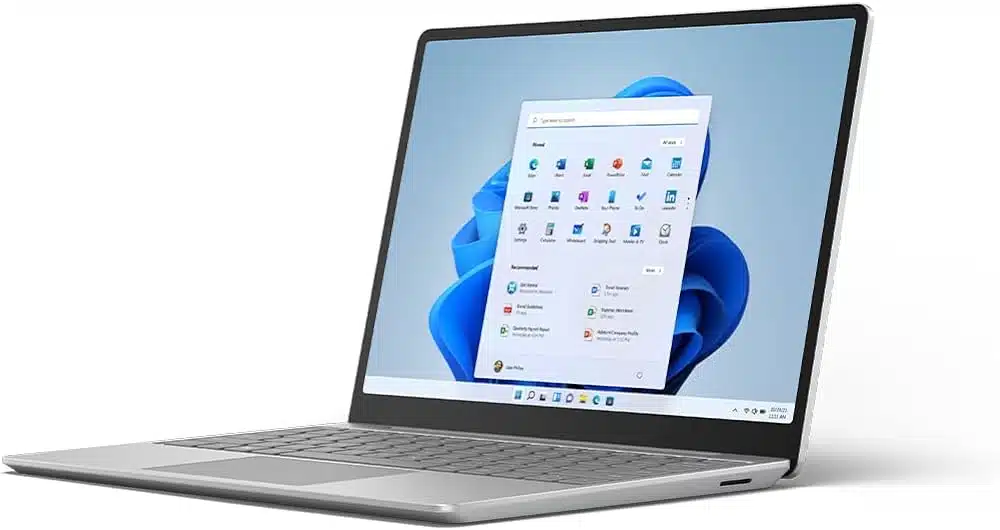
Best standalone drawing tablet for working on the move
Screen size: 10.5 inches | Processor: Intel Pentium | RAM: 8GB | Storage: 128 GB
Whenever I think about a device that seamlessly blends portability with performance, the New Microsoft Surface Go 2 comes to mind. Its design and features cater specifically to the demanding needs of professional artists and designers who are always on the move.
Weighing just 1.2 pounds, it felt like a feather in my bag, making it effortless to carry around. This portability was a must for someone like me who is always on the move. Whether I was hopping between meetings or finding a new spot for a burst of inspiration, the Surface Go 2 was always there, hassle-free.
The 10.5-inch high-resolution screen was another highlight. It rendered colors and details with such clarity that it became a pleasure to work on my designs and graphics. Despite its compact size, the screen never felt too small, striking the perfect balance for both portability and usability.
I particularly appreciated the versatility of the Surface Go 2. The adjustable Kickstand and the Signature Type Cover transformed it from a tablet to a laptop in seconds. As someone who values flexibility in their workflow, this feature allowed me to switch between sketching designs with a stylus and typing out emails on the keyboard effortlessly.
Connectivity was never an issue with its USB-C port and headphone jack. I found myself easily connecting to various peripherals, from external drives to digital drawing pads, without any hiccups. The Full HD front and rear-facing cameras were a boon for video calls, ensuring I was always presentable and clear.
Performance-wise, the Intel Pentium Gold Processor, coupled with 8GB of RAM and a 128GB SSD, handled all my tasks with ease. I could run multiple design applications simultaneously without experiencing any significant slowdowns. However, I did feel the pinch of the limited 125GB storage, but cloud storage solutions came to the rescue, providing ample space for my large files and designs.
The Type Cover keyboard, while compact and missing a backlit feature, was surprisingly comfortable to type on. Its size seemed intentionally designed to maintain the tablet’s lightweight profile, which I appreciated. For late-night work sessions, I did pair it with an external backlit keyboard, which worked perfectly.
In summary, the New Microsoft Surface Go 2 was a device that consistently met my professional needs, offering a perfect blend of portability, versatility, and power. For any creative professional seeking a reliable and efficient tool to aid their artistic endeavors, I can wholeheartedly recommend the Surface Go 2.
| PROS | CONS |
| ➕ Exceptional portability and lightweight design | ➖ Cramped Type Cover keyboard |
| ➕ Adjustable Kickstand and Signature Type Cover | ➖ Low storage |
| ➕ Intel Pentium Gold Processor and ample storage | ➖ No backlit keyboard |
| ➕ Full HD cameras for clear video calls and photo capture |
Latest Price on Amazon:

3. XPPen Magic Drawing Pad 12.2-Inch — Best Drawing Tablet for Paper-Like Feel

Best for natural pen-on-screen drawing
Screen size: 12.2 inches | Processor: ARM-based (Android 12) | RAM: 8GB | Storage: 256GB (expandable to 512GB)
When creative flow strikes, the XPPen Magic Drawing Pad is built to keep up—no computer required. Designed specifically for digital artists who want precision and mobility in one device, this 12.2-inch tablet balances a paper-like feel with solid tech specs to support your workflow.
The star here is the X3 Pro stylus, featuring a groundbreaking 16,384 pressure levels—double the standard in most drawing tablets. With no battery or pairing needed, it’s ready to go the moment inspiration hits. Lines felt impressively smooth, whether I was sketching thumbnails or inking fine details.
Its display truly complements the pen. The AG-etched glass surface mimics the resistance of real paper, and with a 2160 x 1440 resolution, 3:2 aspect ratio, and 109% sRGB color coverage, every stroke looked vibrant and accurate. Even during long sessions, my eyes stayed comfortable thanks to TÜV Rheinland certification and layered soft light treatment.
Portability is a major win. Weighing just 1.32 pounds and only 6.9mm thick, it easily slips into any backpack or tote. Whether I was sketching outdoors or working from a coffee shop, it was light and compact enough to go unnoticed until needed.
The device runs on Android 12, with 8GB RAM and 256GB internal storage (expandable to 512GB). That combination gave me fluid multitasking, especially with its dual-window mode for reference images or tutorials on the side. Bonus: it includes a 13MP rear and 8MP front camera for on-the-go photography or video calls.
Battery life held strong with its 8000 mAh capacity, offering up to 13 hours of creative use. For mobile creators who hate being tied to an outlet, this is a reliable companion.
While you won’t get access to full desktop-level software, for Android-based creative workflows, the XPPen Magic Drawing Pad is a highly capable, travel-ready option.
| PROS | CONS |
| ➕ Industry-first 16K pressure stylus for smooth, precise input | ➖ Not compatible with desktop design software |
| ➕ Paper-like AG screen with vibrant colors and anti-glare | ➖ Android ecosystem may limit advanced workflow options |
| ➕ Slim, lightweight, and super portable | |
| ➕ Excellent battery life with 13-hour runtime |
Latest Price on Amazon:

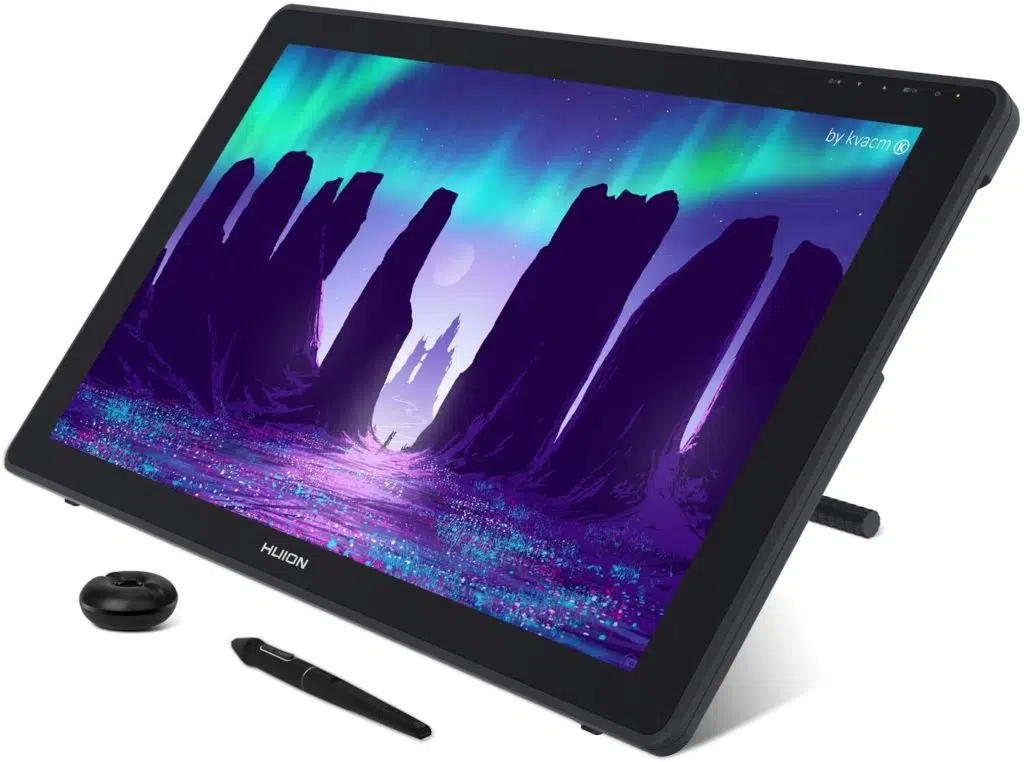
4. HUION Kamvas 22 — Best Drawing Tablet with Large Workspace
Best pen-supported standalone tablet on a budget
Screen size: 21.5 inches | Processor: A14 Bionic chip | RAM: 4GB | Storage: 64GB
Reflecting on my personal experience with the HUION Kamvas 22, it’s a device that consistently impresses me with its harmonious blend of large workspace, high-quality features and affordability.
From the first use, the PenTech 3.0 technology, embodied in the battery-free digital pen PW51, caught my attention. Its precision and control are outstanding, without any noticeable lag or wobble.
The Kamvas 22’s 21.5-inch full HD display is another standout feature, boasting a 140% color gamut volume and Quantum Dot technology. The resulting display is a vast digital canvas that brings colors to life with a vibrancy and purity surpassing regular LCD screens. This combination of size and color fidelity is a joy to work with, allowing for detailed and vivid creations.
In my time using the Kamvas 22 Plus, the full lamination technology has proven to be a significant enhancement. By minimizing parallax, it ensures cursor precision, a critical factor for intricate design work. The etched glass screen, reducing glare and offering a paper-like texture, further adds to the immersive drawing experience.
The convenience of the full-featured USB-C cable, simplifying connectivity and reducing cable clutter, cannot be overstated. It’s a practical aspect that enhances the overall user experience, contributing to a more organized and efficient workspace.
However, it’s worth noting that the device has its limitations. The singular nib type of the PenTech 3.0 might feel restrictive for some artists accustomed to a variety of nib options. Additionally, the 1080×1920 screen resolution, while adequate, might not meet the expectations of professionals seeking ultra-high resolution on a 21.5-inch display.
To conclude, the HUION Kamvas 22 Plus offers a unique combination of premium pen performance, stunning display, and practical features, all at an affordable price point, making it an excellent choice for both budding and professional digital artists.
| PROS | CONS |
| ➕ PenTech 3.0 with customizable buttons | ➖ Screen resolution not up to the mark |
| ➕ 140% color gamut volume and Quantum Dot technology | ➖ Only one kind of nib |
| ➕ Spacious 21.5-inch full HD display | |
| ➕ 3-in-1 cable for a clutter-free workspace |
Latest Price on Amazon:

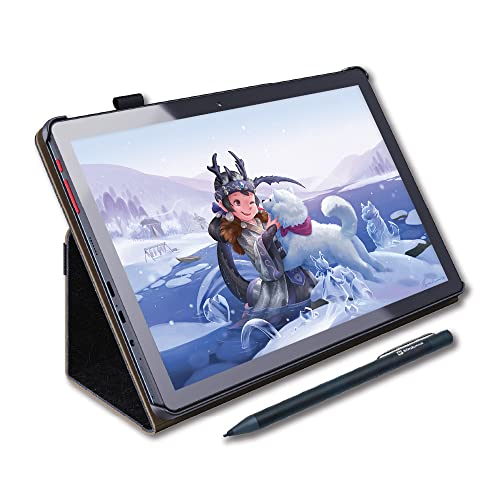
5. PicassoTab X Drawing Tablet — Best Budget-Friendly Standalone Tablet

Best for beginner artists and students
Screen size: 10 inches | Processor: MediaTek Quad-Core | RAM: 4GB | Storage: 64GB | OS: Android
The PicassoTab X makes digital art accessible to beginners and students without the need for a computer or expensive gear. It’s an all-in-one Android-based tablet that’s portable, easy to use, and comes loaded with features tailored to entry-level creators.
What stands out immediately is the value. Along with the 10-inch tablet, you get four bonus accessories in the box: a protective case, drawing glove, screen protector, and universal power adapter. This makes it especially appealing for anyone just starting their creative journey—it’s gift-ready out of the box.
The 1920 x 1080 IPS HD screen provides clear visuals for sketching, taking notes, or animating on the go. Paired with the included active stylus pen, the touch response was smooth enough for light sketching and handwriting tasks. While it doesn’t match the pressure sensitivity of professional pens, it’s responsive and functional for beginners.
Running on Android with a MediaTek quad-core processor and 4GB RAM, the PicassoTab handled basic art and note-taking apps comfortably. It also comes with pre-installed drawing and animation apps, giving users a ready-made space to start creating. The 64GB internal storage is enough for a library of apps and files, with support for additional storage if needed.
Connectivity options are surprisingly robust for its price point. I was able to connect to Wi-Fi for cloud backups and updates, and even link it to a TV via micro HDMI to view art on a bigger screen. The USB-C port adds modern flexibility, while GPS support makes it handy for location-based use.
Battery life runs up to 5 hours, which is fair for light use but may require a midday charge during extended sessions. Still, for a compact tablet that weighs just over 3 pounds, it’s light enough to carry to class, travel, or work on-the-go.
Overall, the PicassoTab X offers one of the most accessible entry points into digital art for hobbyists and students. It may not be built for advanced professionals, but it more than delivers for its intended audience.
| PROS | CONS |
| ➕ Affordable all-in-one drawing tablet with stylus included | ➖ Not suitable for advanced or pressure-sensitive art |
| ➕ Comes with 4 bonus items (case, glove, adapter, protector) | ➖ 5-hour battery life may feel limited |
| ➕ Pre-installed apps make it beginner-friendly | |
| ➕ Micro HDMI and USB-C connectivity options |
Latest Price on Amazon:
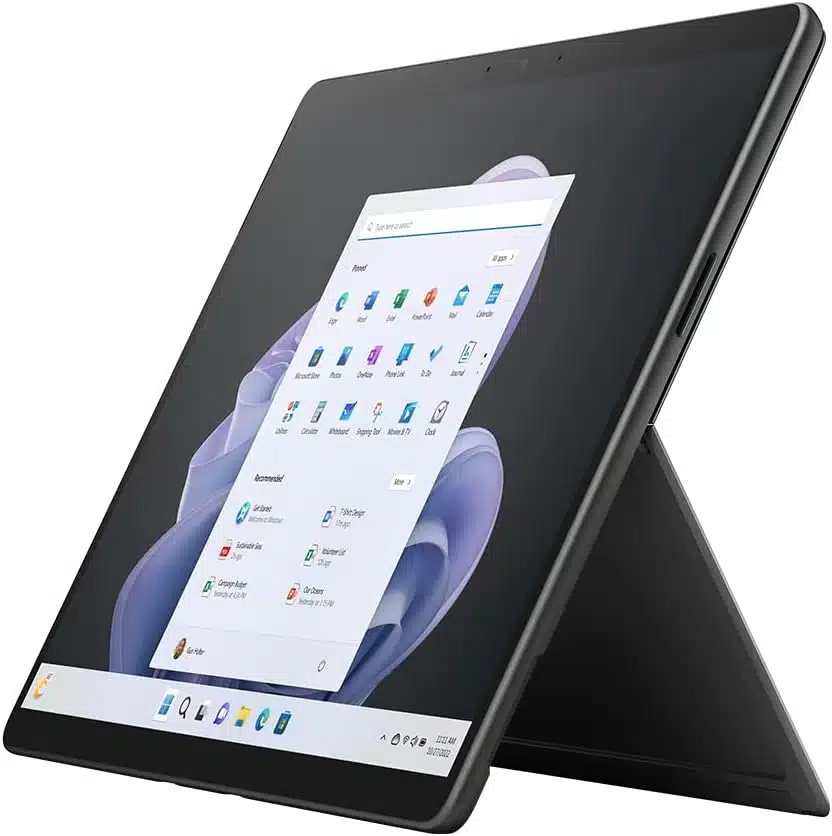
6. Microsoft Surface Pro 9 — Best Value Drawing Laptop
Best 2 in 1 standalone drawing tablet
Screen size: 13 inches | Processor: Intel Evo i5 | RAM: 8 GB | Storage: 256 GB
Now, if you’re serious about your art but don’t want to spend big bucks on a drawing tablet, the Microsoft Surface Pro 9 is just the perfect tablet. This device gives you the power of a laptop but comfort of a tablet.
The heart of the Surface Pro 9 is its Intel Evo platform, driven by the 12th Gen Intel Core processors. This powerhouse enables me to effortlessly juggle complex tasks, providing a fluid multitasking experience that’s essential for my work.
A key highlight is its 13″ PixelSense touchscreen, boasting a resolution of 2880 x 1920 pixels. Whether I’m sketching, browsing, or watching videos, the vibrancy and clarity of the display never cease to amaze me.
Another feature I’ve grown to appreciate is the built-in Kickstand. It’s not just about propping up the device; it’s about finding the perfect angle for comfort and productivity. This adjustability, combined with an anti-glare coating, makes long hours of work much more bearable, significantly reducing eye strain.
The Surface Pro 9’s connectivity, facilitated by Thunderbolt 4 ports, simplifies connecting external devices, a convenience I’ve found invaluable in my daily use. And with a battery life of up to 15.5 hours, it reliably supports me through the most demanding days without the constant need for recharging.
While it’s not without its flaws – the screen could be more vivid, and the trackpad more responsive – these are minor compared to the overall utility of the device. Simple adjustments and external peripherals easily mitigate these issues.
In conclusion, the Microsoft Surface Pro 9 stands out as a versatile and potent tool for digital professionals. Its blend of a high-performance Intel Evo platform and extended battery life, all packed in a sleek 2-in-1 design, makes it an indispensable part of my daily tech lineup.
| PROS | CONS |
| ➕ Intel Evo platform with 12th Gen Intel Core processors | ➖ Screen could be more vivid |
| ➕ Virtually edge-to-edge 13″ PixelSense touchscreen | ➖ Trackpad is not that great |
| ➕ Adjustable Kickstand for optimal viewing angles | |
| ➕ Up to 15.5 hours of battery life |
Latest Price on Amazon:

7. Samsung Galaxy Tab A9+ — Best for Everyday Drawing and Multitasking

Best for casual sketching, note-taking, and media consumption
Screen size: 12.9 inches | Processor: M2 chip | RAM: 8 GB/ 16 GB | Storage: 2 TB
The Samsung Galaxy Tab A9+ offers a well-balanced option for beginner digital artists, students, and families looking for an affordable standalone tablet that supports drawing, multitasking, and everyday entertainment, all without needing a separate computer.
With its 11-inch WUXGA display running at 1920 x 1200 resolution and 90Hz refresh rate, visuals appear smooth and crisp, whether you’re sketching ideas or watching tutorials. While it’s a TFT LCD panel and not AMOLED, it still delivers strong clarity and brightness (up to 480 nits), making it comfortable to use even in bright environments.
The Snapdragon 695 chipset, paired with 4GB or 8GB of RAM, provides enough power for basic drawing apps, video playback, and productivity tasks. Multitasking is surprisingly fluid, thanks to Samsung’s multi-window support, which allows users to split the screen and work across apps, handy for referencing images or taking notes while sketching.
Sound is another strength, with quad speakers powered by Dolby Atmos, delivering immersive audio when working with animations, music, or streaming content. And with expandable storage up to 1TB, there’s plenty of room for your digital creations, documents, and media files.
The tablet runs on Android, giving you access to apps like Sketchbook, Infinite Painter, and Clip Studio Paint via the Play Store. While it doesn’t ship with a stylus like the premium Galaxy Tab S series, it is compatible with third-party capacitive pens for light sketching and note-taking.
With a lightweight build (1.32 lbs) and durable design, the Galaxy Tab A9+ is ideal for on-the-go use. It’s especially appealing for families, Samsung Kids mode offers a safe space for children to play, learn, and explore art apps while parents stay in control.
For those who want a portable, versatile drawing-capable tablet without stretching the budget, the Galaxy Tab A9+ is a dependable pick.
| PROS | CONS |
| ➕ Affordable and portable with 11-inch 90Hz display | ➖ No included stylus; stylus support is limited |
| ➕ Snapdragon 695 chipset for responsive performance | ➖ TFT LCD is less vibrant than AMOLED |
| ➕ Quad speakers with Dolby Atmos | |
| ➕ Multi-window support and expandable storage up to 1TB |
Latest Price on Amazon:
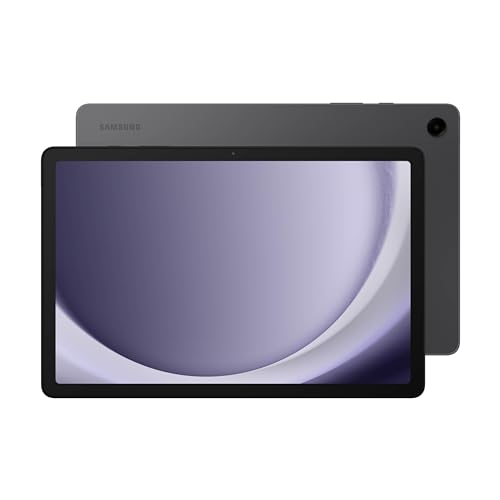
8. SAMSUNG Galaxy Tab S9+ — Best Tablet for Drawing and Sketching
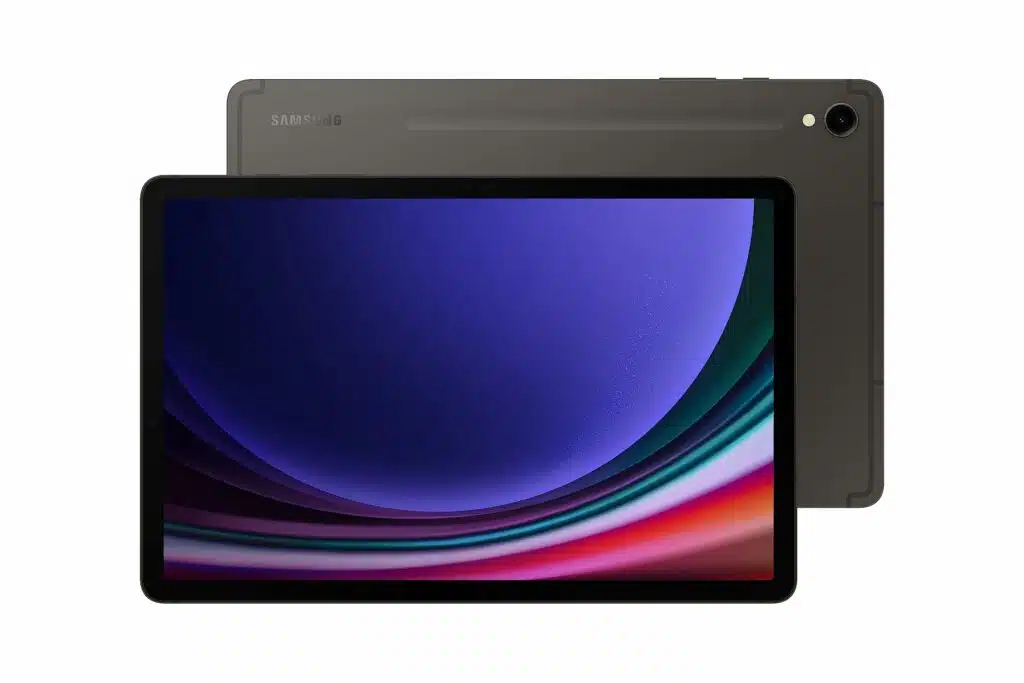
Screen size: 12.4 inches | Processor: Snapdragon 8 Gen 2 | RAM: 16 GB | Storage: 512 GB
I got the Samsung Galaxy Tab S9+ primarily for its unparalleled capabilities in drawing and sketching– and the overall impressive blend of innovative technology and artist-friendly features. The 12.4” Dynamic AMOLED 2X display is a marvel, providing not just a vast canvas for my creations but also delivering vivid, true-to-life colors and exceptional contrast.
Equipped with the Snapdragon 8 Gen 2 processor, the Tab S9+ stands out in its class for performance. This powerhouse allows me to handle graphic-intensive software and multitask with ease, an indispensable feature when my creative process involves flipping between sketching apps and reference materials.
The S Pen, a key feature for any digital artist, transforms the tablet into a virtual canvas. Its natural feel, combined with advanced pressure sensitivity and minimal latency, allows for a drawing experience that closely mimics traditional art methods.
In my ventures beyond the studio, the tablet’s robust build, characterized by its IP68 rating and Armor Aluminum frame, gives me peace of mind. Whether sketching in a bustling cityscape or a tranquil natural setting, I can focus on my art without worrying about the elements.
Connectivity, too, is a strong suit of the Tab S9+. With Wi-Fi 6E support, I’ve experienced smooth streaming and swift file transfers, which are crucial for cloud-based collaborations and accessing online resources. Moreover, the DeX Mode has been a boon, offering a PC-like experience that’s perfect for tasks that require a more traditional setup.
While the lack of a headphone jack and the non-lockable high refresh rate are minor drawbacks, they haven’t detracted significantly from my overall experience. Solutions like Bluetooth headphones or a USB-C adapter have served as adequate substitutes.
To conclude, the Samsung Galaxy Tab S9+ excels in providing a superior digital canvas for drawing and sketching, backed by powerful performance and artist-centric features. Despite a few limitations, it remains an outstanding choice for professionals in the creative field.
| PROS | CONS |
| ➕ Exceptional 12.4” AMOLED display with high resolution | ➖ No headphone jack, limiting audio options |
| ➕ Powerful performance with Snapdragon 8 Gen 2 processor | ➖ No option to lock high refresh rate |
| ➕ Highly responsive and precise S Pen | |
| ➕ Durable with IP68 rating | |
| ➕ Wi-Fi 6E for high-speed connectivity | |
| ➕ DeX Mode for a PC-like experience |
Latest Price on Amazon:

9. Amazon Fire Max 11 tablet — Best Drawing Tablet with Great Battery-Life
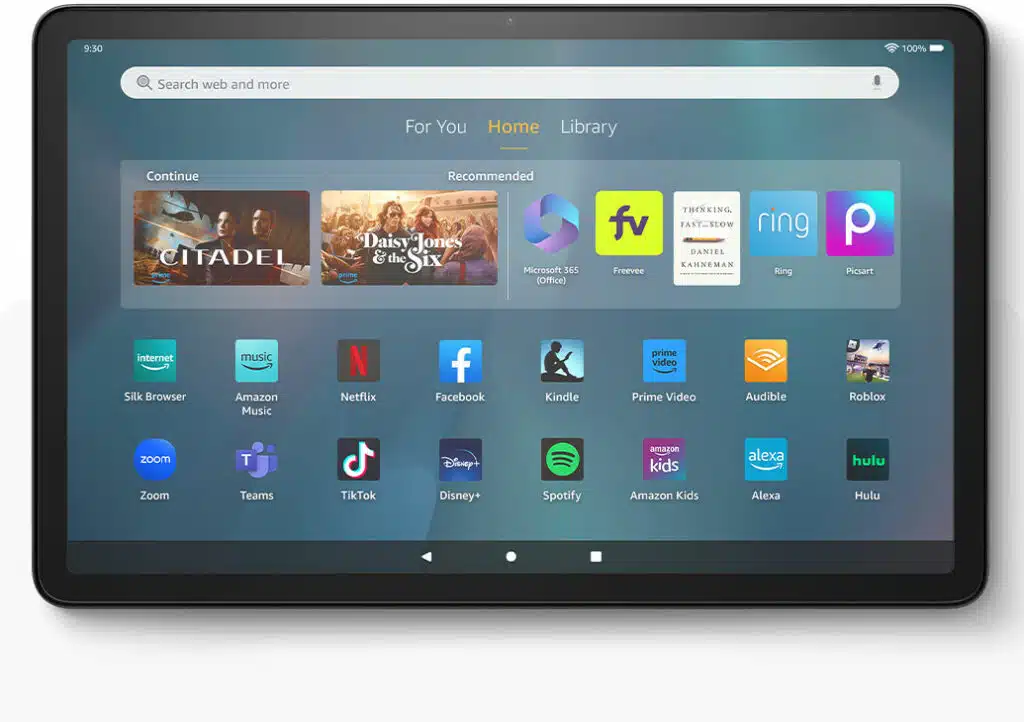
Screen size: 11 inches | Processor: Octa-core | RAM: 4 GB | Storage: 64 GB
Next on my list is the Amazon Fire Max 11 tablet, a device that particularly impressed me with its exceptional battery life. But I was also drawn to its promise of high-performance for tasks like sketching and design.
The 11-inch screen of the Amazon Fire Max 11, with its 2000 x 1200 pixel resolution, offered a substantial workspace, essential for detailed creative work. Its clarity is a standout feature, especially important when working on intricate designs. The TÜV-Rheinland Low Blue Light Certification was a thoughtful inclusion, safeguarding my eyes during prolonged use.
Its performance is backed by an octa-core processor, which, in my experience, managed graphic-intensive applications with ease. The smooth multitasking capability, thanks to the 4 GB RAM and robust Wi-Fi 6, was essential for my workflow involving various design tools. The integration of the Stylus Pen enhanced the tablet’s functionality, enabling precise stroke capture and making it an indispensable part of my work.
Storage was never an issue with its 64 GB internal capacity, expandable up to 1 TB, providing plenty of space for large design files. The 14-hour battery life was a significant advantage, allowing for extended creative sessions without the need for frequent recharging.
The tablet’s durability, indicated by its strengthened glass and aluminum body, proved reliable in the often mobile lifestyle of an artist. However, I did encounter some limitations. The restricted range of available applications posed challenges, especially when I needed specific software not supported by the platform.
The uncertainty around future operating system updates was another concern, considering the evolving demands of digital art software. Additionally, the 8 MP camera, while sufficient for general purposes, was somewhat lacking for high-quality image capture required in some of my projects.
In summary, the Amazon Fire Max 11 tablet stands out for artists engaged in digital drawing and sketching, offering a compelling mix of display quality, performance, and stylus integration. Its design and build quality are additional pluses.
| PROS | CONS |
| ➕ High-resolution, low blue light certified screen ideal for detailed work | ➖ Limited app selection might not suit all artistic needs |
| ➕ Powerful processor and Wi-Fi 6 for smooth multitasking | ➖ Uncertainty about future OS updates |
| ➕ Long battery life suitable for extended creative sessions | |
| ➕ Durable and portable design | |
| ➕ Expandable storage options |
Latest Price on Amazon:

10. Wacom Cintiq Pro 16 — Best Drawing Tablet for Digital Artists
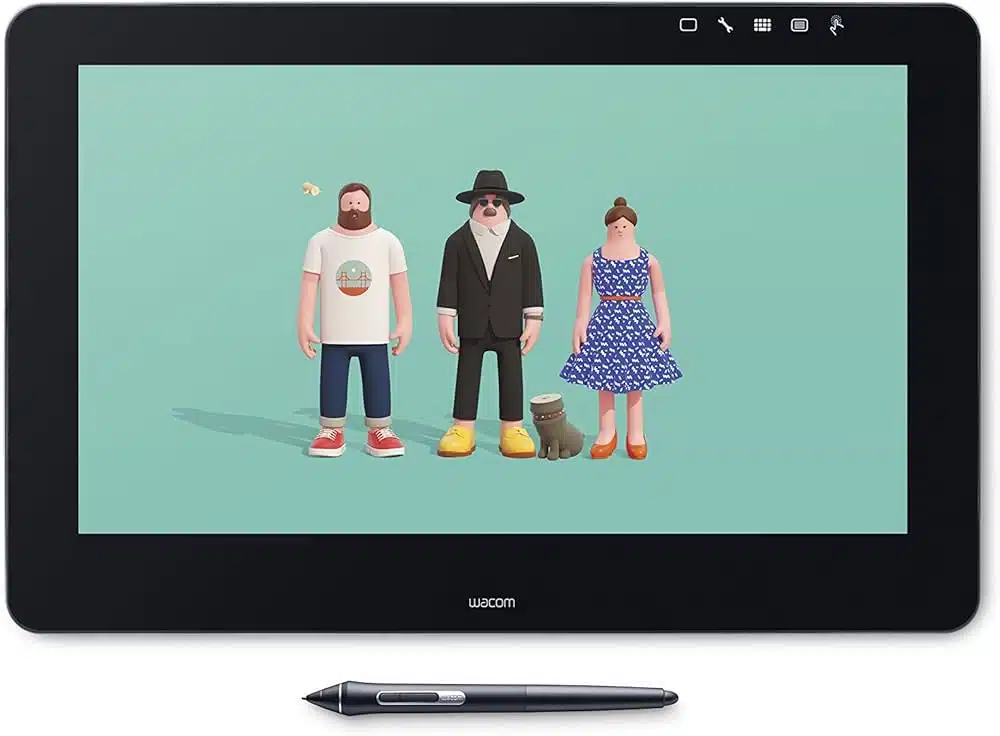
Best Standalone Tablet for Digital Artists
Screen size: 16-inch | Resolution: 3840 x 2160 pixels | Pressure Sensitivity: 8192 Levels | Operating System: Mac OS X 10.14 Mojave, Windows 8.1, Windows 7
When I initially got the Wacom Cintiq Pro 16, it was a conscious choice aimed at enhancing both the quality and efficiency of my design work. Its significant features, like the high-pressure sensitivity and high-resolution display, were key factors in this decision.
The heart of the Wacom Cintiq Pro 16 lies in its extraordinary pen performance. With 8192 levels of pressure sensitivity and an almost magical lag-free tracking, it mirrors the natural flow of drawing on paper.
Its 4K resolution is a feast for the eyes. The 3840 x 2160 pixels packed into the 16-inch display bring an unmatched clarity to your work. The color accuracy, boasting 98% Adobe RGB, was a crucial factor for me as a designer. It ensured that what I create on screen translated faithfully into the real world, a vital aspect when working on brand designs that demand color precision.
The tablet’s etched glass screen is a subtle yet significant feature. It reduces glare and reflections effectively, which is a relief during long work hours. This design also provides a tactile experience similar to drawing on paper, a detail that I found particularly delightful.
However, it’s important to address the elephant in the room – the lack of touch capability. This might seem like a setback, especially in an era where touchscreens are ubiquitous. But in my experience, this can be a blessing in disguise. It eliminates the accidental brushes and zooms that touchscreens are prone to, allowing for a more controlled and focused drawing experience.
One of the most user-friendly aspects of the Cintiq Pro 16 is its array of shortcuts. The on-screen controls, two pen side switches, and the eight ExpressKeys are thoughtfully placed. They make workflow seamless, reducing the need to shuffle between the tablet and other devices.
In conclusion, the Wacom Cintiq Pro 16 is a remarkable tool for digital artists. Its precision, color accuracy, and user-friendly design make it an ideal choice for detailed and professional artwork.
| PROS | CONS |
| ➕ Exceptional pen performance with 8192 levels of pressure sensitivity | ➖ Lack of touch capability might be a drawback for some users |
| ➕ Stunning 4K resolution with 98% Adobe RGB color accuracy | ➖ Initial learning curve with connectivity and setup |
| ➕ Tactile etched glass screen that reduces glare | |
| ➕ User-friendly with customizable shortcuts and controls | |
| ➕ Effective integration with both Mac and Windows |
Latest Price on Amazon:
How I Selected and Tested the Best Standalone Drawing Tablets
In this guide, I’ll take you through the meticulous process I personally undertook to select and test the best standalone drawing tablets. This journey was all about understanding the unique needs of creative professionals and ensuring the tablets I recommend truly cater to those needs, considering everything from budget constraints to technical specifications.
Selection Process
- Understanding You
Firstly, I delved deep into understanding the demographics of professionals who use standalone drawing tablets. I considered factors like age, gender, education, occupation, income, location, marital status, and technical proficiency. My focus was on artists, designers, students, illustrators, and animators who thrive in the digital art sphere.
- Requirements Gathering
Next, I reached out with comprehensive questions about their professions, daily tasks, workflow, pain points, desired features, size preferences, portability, connectivity, operating system needs, build quality, budget, brand preferences, and additional functionalities they sought in a tablet.
- Identifying Pain Points
I analyzed common pain points like limited stylus accuracy, lag issues, software incompatibility, screen resolution, battery life, ergonomic issues, storage, connectivity, and price. This helped me pinpoint tablets that effectively address these issues.
- Product Evaluation
I evaluated a wide array of tablets, assessing each based on how well they tackled these pain points and met specific requirements of creatives. This included checking stylus accuracy, pressure sensitivity, software compatibility, display quality, size, customization, battery life, ergonomic design, storage capacity, connectivity, price, and durability.
- Budget Consideration
I carefully considered the budget, ensuring to include tablets across a range of prices while maintaining required specifications, from affordable models to premium ones for those willing to invest more.
Testing Process
- Performance Testing
I evaluated the tablets through various tasks typical for digital artists and designers. I tested them with resource-intensive software, checking stylus accuracy, pressure sensitivity, responsiveness, lag, and overall performance.
- Display Evaluation
I scrutinized the display quality, focusing on resolution, color accuracy, viewing angles, brightness, and clarity, ensuring the tablets meet the high standards of professionals who rely on detailed and accurate visuals.
- Usability Assessment
I assessed the tablets’ usability, looking at user interface, navigation, touch control responsiveness, and ergonomics. It was crucial that these tablets offer an intuitive experience that enhances creative workflow.
- Compatibility Testing
I tested each tablet’s compatibility with industry-standard software and various operating systems, checking for software updates and ongoing support from manufacturers.
- Reliability and Durability Evaluation
I evaluated the build quality, durability, and resistance to wear and tear, considering material quality, construction, and additional protective features. The tablets underwent durability tests to ensure they withstand daily use.
- Battery Performance
Lastly, I measured battery life under typical usage conditions, considering power-saving features and charging options. This was vital to ensure they support the uninterrupted productivity demands of professionals.
Buying Guide: How To Choose The Best Standalone Drawing Tablet
Are you still uncertain about the right drawing tablet for you? Check out the buying guide below and choose wisely.
🚀 Enhance Performance with High RAM Power
A tablet’s performance is paramount as it directly impacts your ability to work with resource-intensive software such as Adobe Photoshop, Illustrator, and Procreate. When selecting a tablet, prioritize models equipped with high-performance processors like the Qualcomm Snapdragon, ensuring smooth and efficient operation even when handling complex artistic projects.
Consider tablets like the Apple iPad Pro 13-Inch (M4), which offer 8GB of RAM to ensure smooth multitasking and efficient performance even when working on complex projects.
🔍 Immerse Clarity with Sharp Resolution
When choosing a tablet for your artistic endeavors, it’s important to consider models that offer accurate color reproduction, sharp resolution pixels, and wide color gamut support. This ensures that the colors you work with are faithfully represented on the screen, allowing you to create designs with precision and confidence.
Look for tablets like the Wacom Cintiq Pro 16, which provides an impressive screen resolution of 3840 x 2160 pixels for sharp and detailed visuals, allowing you to appreciate the intricate details of your artwork.
🖊️ Ensure Stylus Support
A stylus is a crucial tool for graphic designers, offering precise drawing and sketching capabilities on a tablet. Opt for a tablet that provides native stylus support or compatibility with a wide range of third-party styluses. Look for pressure sensitivity, tilt recognition, and low latency stylus to ensure an exceptional drawing experience.
Choose tablets that offer stylus support, such as the Samsung Galaxy Tab A9+, with high-quality stylus pens that offer exceptional precision and responsiveness, making your creative process fluid and intuitive.
💾 Sufficient Storage Capacity
A tablet with ample storage capacity is crucial for storing design files and creative assets. For added flexibility, look for expandable storage options like SD card slots or USB ports.
Consider tablets like the XPPen Magic Drawing Pad, which offer generous storage capacities of up to 512GB, allowing you to store all your drawings and download numerous creative apps without worrying about running out of space.
🔋Extended Battery Life
Choose a drawing tablet with extended battery life for uninterrupted creative sessions. Consider tablets with power-saving features like auto-sleep or battery optimization modes.
Look for tablets like the Amazon Fire Max 11 tablet, which provide a long battery life of up to 10 hours or more, ensuring you can work on your art projects without interruptions.
🌐 Versatile Range of Connectivity Options
Opt for a tablet with many connectivity options, including USB, HDMI, and wireless connections, for seamless integration with various devices.
Choose tablets like the Apple iPad Pro with M2 Chip, which offer a wide range of connectivity options such as USB-C, Bluetooth, and Wi-Fi, allowing you to connect and collaborate with other devices and accessories effortlessly.
🛠️ Robust Build Quality
Look for a drawing tablet with a durable build quality to withstand regular use. Consider features like scratch-resistant screens or protective cases for added protection.
Consider tablets like the HUION Kamvas 22, known for their robust build quality and long-lasting durability, ensuring that your tablet can withstand the demands of your creative endeavors.
⌨️ Compatibility with Keyboard and Trackpad
Select a tablet that supports keyboard and trackpad integration for enhanced productivity. This is useful for tasks that require typing, zooming, or scrolling.
Look for tablets like the New Microsoft Surface Go 2, which are compatible with keyboards and trackpads, transforming them into versatile 2-in-1 devices that enhance productivity and allow for more precise control.
🏃♂️ Portability and Compact Design
Consider compact tablets that are lightweight and portable, ideal for artists on the go. Look for tablets like the Samsung Galaxy Tab A9+, which feature a portable and compact design, making them easy to carry and ideal for artists or designers on the go.
🎨 Pressure Sensitivity for Precise Artistic Control
Choose a tablet with higher pressure sensitivity levels for enhanced artistic expression. Look for customizable shortcut keys or programmable buttons for improved workflow efficiency.
Choose tablets like the HUION Kamvas 22, which offer high-pressure sensitivity levels and additional features like tilt and rotation support, allowing for more expressive and natural drawing experiences.
💰 Explore Cost-Effective Options
For beginners or students, consider budget-friendly options with essential features without compromising quality. Consider tablets like the PicassoTab X Drawing Tablet, which offers budget-friendly options without compromising on essential features, making them suitable choices for students or artists on a tight budget.
Frequently Asked Questions
Below, I have answered frequently asked questions about the best cheap drawing tablets.
Is there such a thing as a standalone drawing tablet?
Yes, there are standalone drawing tablets that don’t require a computer or external device to function. They typically have an operating system and can run various drawing and creative software directly on the device. These tablets often come with built-in storage, a stylus, and a display designed specifically for drawing and digital art purposes. They offer artists and designers the convenience of working on their creations without needing a separate computer or laptop.
Do drawing tablets need an app?
Yes, drawing tablets need drawing apps to utilize their features fully. These apps provide a digital canvas for creating and editing artwork, offering various tools and brushes. Popular drawing apps include Adobe Photoshop, Procreate, and SketchBook. Compatibility with your preferred app is important when choosing a drawing tablet.
Do all drawing tablets need a laptop?
No, not all drawing tablets require a laptop. Standalone graphics tablets have built-in screens and operating systems, along with other specs that allow them to function independently. This is why a stand-alone graphics tablet does not need to rely on another device to function.
How important is a drawing tablet for a digital artist?
A drawing tablet is important for artists, designers, and creative professionals. It provides a digital canvas for creating artwork, offering precise control, pressure sensitivity, and other features that traditional mediums may not offer. A drawing tablet enhances productivity, allows easy experimentation, and provides a versatile platform for digital art creation.
Final Thoughts: Choosing the Ideal Standalone Drawing Tablet
While finding the right standalone tablet for one’s drawing needs is very subjective, in an overall sense, you want a tablet that offers features like a high-resolution display, color accuracy, ergonomic design, and connectivity options.
For me, the Apple iPad Pro 13-Inch (M4) has stood out to be the best standalone drawing tablet. Its compatibility with various software and operating systems makes it seamlessly integrate into my creative workflow.
But which tablet are you inclining toward? I’d love to hear in the comments below!
Related Posts:
- 10 Best Huion Tablets
- 10 Best Tablets for Photoshop
- 10 Best Drawing Tablets for Animation
- 10 Best Tablets for Illustrator
- Best Samsung Tablet for Drawing: 10 Expert Picks
- XPPen Magic Drawing Pad
- XPPen Artist Pro 16 (Gen 2) – Drawing Tablet Review
- 10+ Best Tablets for Illustrator
- 10 Best Cheap Drawing Tablets